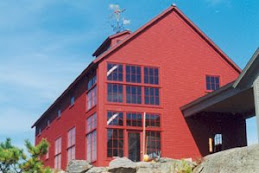
We were contacted by Sheri Koones in 2011 about the possibility of including our home in her new book. After several discussions, emails, and photo sharing, she scheduled a visit and photo shoot at our home in May, 2011. Sheri, her photographer Philip Jenson, and her son as her assistant, spent about four hours staging and taking pictures of our house. To be honest, I dreaded the "staging" part and imagined having to remove every object from my home to make it look like many homes in books and magazines - cold, stark, and empty places where children and pets are forbidden (except for the photo-shoot when they stick the kid or dog into the middle of the shot to make it look "natural"). This was not the case with our house. We tidied up, removed some clutter, but basically, what you see in the photos is mostly representative of our house. The book, published by Abrams, came out last Fall, 2012 and we are so proud to be included in it. It's not only a gorgeous book to place on your coffee table, but it contains a ton of good information and resources. It's a perfect primer for people looking for information on the many different technologies and strategies that can be used to build an energy efficient home.
Saturday, March 30, 2013
Prefabulous + Almost Off the Grid
We were contacted by Sheri Koones in 2011 about the possibility of including our home in her new book. After several discussions, emails, and photo sharing, she scheduled a visit and photo shoot at our home in May, 2011. Sheri, her photographer Philip Jenson, and her son as her assistant, spent about four hours staging and taking pictures of our house. To be honest, I dreaded the "staging" part and imagined having to remove every object from my home to make it look like many homes in books and magazines - cold, stark, and empty places where children and pets are forbidden (except for the photo-shoot when they stick the kid or dog into the middle of the shot to make it look "natural"). This was not the case with our house. We tidied up, removed some clutter, but basically, what you see in the photos is mostly representative of our house. The book, published by Abrams, came out last Fall, 2012 and we are so proud to be included in it. It's not only a gorgeous book to place on your coffee table, but it contains a ton of good information and resources. It's a perfect primer for people looking for information on the many different technologies and strategies that can be used to build an energy efficient home.


Wednesday, January 25, 2012
Presentation and Book Signing, Wed. Feb. 15th 7pm
We rescheduled the presentation and book signing that was cancelled due to the October snowstorm and power outage. Our new date in Wednesday, February 15th at 7pm with a snow date of February 29th. The presentation will be held at the Licia & Mason Beekley Community Library in New Hartford. For more information check out the poster I added to my original post with the announcement (in October, 2011) below on this blog. Come and learn about residential solar applications and about building a super energy efficient home!
Friday, November 18, 2011
If I have a PV system, why do I need a back up generator?
First, I'll mention that the program scheduled for Nov. 2 at the Beekley Library in New Hartford was cancelled due to the storm. We are currently trying to reschedule, likely for sometime in late winter or early Spring. I'll post it when we have a firm date.
Now, on to my subject of choice today. Backup generators.
As many of us have learned this year, extreme weather events disrupt our lives and remind us of our dependence on fossil fuels. It's always a surprise to people that we also are "powerless" when the grid is down, even with our 38 PV panels shimmering brightly in the sun on our roof. I wanted to explain this phenomenon. Since we are tied to the CL&P grid, we are required to shut down our system to prevent harm to line workers. Our system is also leased, so we cannot make changes to the system, to allow us to add batteries, or other "bypass" systems to the connection we have to the grid. While there are many benefits to a grid tied system (no large room full of expensive batteries to store our electricity), this is one disadvantage. If we had to do over again (and had the money to purchase the PV system ourselves), I still don't think we would have done it differently. Batteries are expensive, dangerous, and require maintenance. Battery technology is improving, but it's still not great enough for me to consider switching to an off-the-grid system.
A more frustrating situation for me during the power outage was the fact that I had to run my little Honda generator, and burn gasoline, just to get my solar thermal loop working (and thus hot water). Duh. That made no sense. So we are currently researching installing several dedicated PV panels (that we would own) and a small battery pack, to power the pumps and sensors on our solar thermal loop in the case of an outage.
One thing I will say about the storm aftermath. Our house was so cozy even without our heating system running for 8 days. It took about 4 days for our slab temperature to drop to 65F, a testament to the excellent insulation and thermal heat sink in our house. When we had the generator running, several hours in the morning and evening, we ran a small electric space heater which was enough to keep us very comfortable.
I have a secret to reveal...I was actually a little bummed when the power came on. I so enjoyed our family time eating dinner by candlelight, having long discussions, playing games and puzzles with our kids. No ipads, laptops, TVs, fights over video games. It wasn't lemons for me, it was slightly sour, but sweet and delicious lemonaid.
Sunday, October 23, 2011

Tuesday, September 20, 2011
New Consumer Book on Solar Power

Saturday, April 2, 2011
CT Zero Energy Challenge Video
Check out the video about our house that Northeast Utilities produced for the CT Zero Energy Challenge. It was shown at the awards ceremony in Hartford on March 9th, 2011. Thank you, NU and the CT Energy Efficiency Fund for the award. Now we can afford to finish our master bathroom!
Wednesday, February 9, 2011
Hibernation

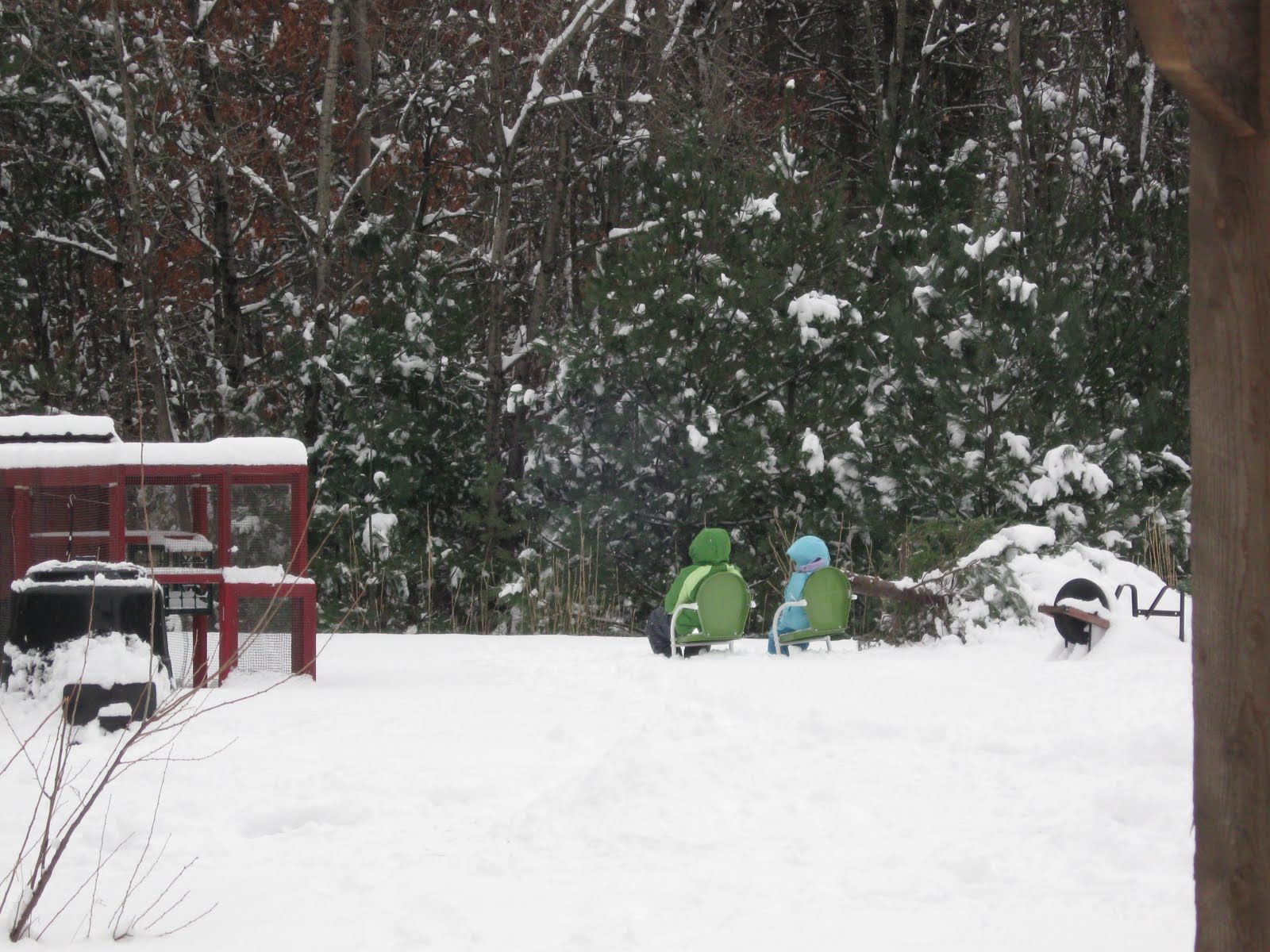 I've had several posts partially written, but the snow storms keep interrupting my writing. So why fight it, write about it.
Oh, to be a kid on a snow day...the eighth one this winter. Growing up in Oklahoma, I didn't get to experience that. I remember Tulsa getting 4 inches once when I was in high school, and that was a big deal, closing down the schools and most businesses. This year, Oklahoma has had two snow storms dropping record amounts of snow, over 24 inches in two storms occurring two weeks apart. If the weather of this past six weeks doesn't prove global warning, than I don't know what does. Increased temperatures affecting the amount of water taken up by warm air masses, that slam into cold, northern air, producing increased precipitation (icy rain, and yes, snow too).
The picture on the right is of our kids sitting in small chairs after the first big storm (24 inches) in mid-January. Subsequent storms have completely buried the black compost bin and the chicken coop is barely visible now. The photo on the left is of our kids sitting on the top of our wood picnic table. In January we got 58 inches of snow and February is shaping up to be the same.
The shoveling kinda sucks but the snow has great insulating properties. I've noticed that our slab floor temperature is rarely dropping below 65F except on super cold days, 15F or lower. We usually keep it at 67F to 68F depending on how much sun we've had. However, I have experimented with letting the slab temp drop on cloudy days and use the backup electric heat to keep from burning propane for the radiant heat. On the occasions I let the floor temp drop, I found that it seemed to come to an equilibrium at 65F without any energy input. It's hard to tell for sure, but I think the snow is helping to insulate the foundation.
For anyone thinking of solar panels. Snow storms over 6 inches will likely require you to remove some snow from the panels. It's just too much to shed on its own, before the next sunny day comes. We put our solar thermal panels on the ground and I am so glad we did. We are able to remove snow easily so we can start making hot water (our evacuated tube solar collectors still produce hot water when it's cloudy, so we want to get them working again quickly after a storm). For our photovoltaic solar panels on the roof, we have this extension pole with a flat, soft, foam squeegie thing on the end that is great for pulling the stubborn snow patches down. Unfortunately, it still requires going up on a ladder, not my favorite thing to do.
On another note, our new batch of chickens are arriving in mid-April. The kids are excited to have cute fuzzy chicks for easter. Sadly, our old hens were picked off by predators late fall over a two week period. Word got out and they were attacked from multiple perspectives (hawk, fox, and possibly coyote). They were scheduled for culling anyway because they were getting too old to lay eggs, but I was hoping to teach my kids where chicken nuggets come from and not feed the local wildlife. I'm thankful for the "learning chickens" and I think our next coop and fencing design will be better, for both us and the chickens.
Saturday, December 11, 2010
It's Official! 2nd place in CT Zero Energy Challenge
On Wednesday the 8th I got the call from CL&P concerning the CT Zero Energy Challenge results and was congratulated for our second place finish. Not that it was a big surprise since everyone's HERS values were announced months ago and that's how the contest was judged this year (next year there are a variety of factors which greatly level the playing field).
Reviewing the 1st and 3rd place finishers, I can't help but pat ourselves on the back for achieving what we did on such a limited budget. The other winners' homes are obviously big budget undertakings that easily push (though I'm just guessing) into the million dollar range. We did ours for less than a third of that. They hired consultants, architects and specialty builders. Karann and I designed, planned, engineered (with over-the-phone consultations from a few sources) and finished the house ourselves. Our builder, Dave Nugent, kicked ass for sure but this was his first "green" house.
Their houses are big (4000 sq. ft. plus), high-end homes unattainable by most, which I think sets a bad example of "green" building. Ours is a modest (some would even say large, if you live in the real world) home at 2670 sq. ft. And I know $320k is still a lot of money but at least it's reasonable for a custom (near) zero energy home, especially since the return on investment is already paying dividends; our electric bill is non-existent ($16 service fee every month) and we've purchased two, 100 gallon tank-fulls of propane in the last year and a half.
Now don't take this like I'm down-playing the accomplishments of the other winners (ok, maybe a little bit) but I do respect that they're setting examples that hopefully their other rich neighbors may follow. Maybe this will set a whole new trend of "keeping up with the Jones". Every neighbor trying to make their home more energy independent than the next.
In the meantime, I hope Karann and I have inspired the average, middle-class person to use some ingenuity, take a little time, and put in some sweat equity to make an energy efficient home that, you too, can be proud of.
Reviewing the 1st and 3rd place finishers, I can't help but pat ourselves on the back for achieving what we did on such a limited budget. The other winners' homes are obviously big budget undertakings that easily push (though I'm just guessing) into the million dollar range. We did ours for less than a third of that. They hired consultants, architects and specialty builders. Karann and I designed, planned, engineered (with over-the-phone consultations from a few sources) and finished the house ourselves. Our builder, Dave Nugent, kicked ass for sure but this was his first "green" house.
Their houses are big (4000 sq. ft. plus), high-end homes unattainable by most, which I think sets a bad example of "green" building. Ours is a modest (some would even say large, if you live in the real world) home at 2670 sq. ft. And I know $320k is still a lot of money but at least it's reasonable for a custom (near) zero energy home, especially since the return on investment is already paying dividends; our electric bill is non-existent ($16 service fee every month) and we've purchased two, 100 gallon tank-fulls of propane in the last year and a half.
Now don't take this like I'm down-playing the accomplishments of the other winners (ok, maybe a little bit) but I do respect that they're setting examples that hopefully their other rich neighbors may follow. Maybe this will set a whole new trend of "keeping up with the Jones". Every neighbor trying to make their home more energy independent than the next.
In the meantime, I hope Karann and I have inspired the average, middle-class person to use some ingenuity, take a little time, and put in some sweat equity to make an energy efficient home that, you too, can be proud of.
Saturday, November 20, 2010
Best Green/Energy Efficient Home in CT!!
On November 9th, 2010, Jeremy and I attended the HOBI Awards (Home Building Industry Awards) sponsored by the Connecticut Home Builders Association. Our general contractor, Dave Nugent from Greenworks Builder, won the award for the "Best Green Energy-Efficient House" in CT for our house. It was exciting to see our house displayed on the huge screen in the banquet room at the Aqua Turf, where everyone was dressed to the nines and people we didn't even know where speaking of our house with the highest praise. The food wasn't too bad either. We were amazed by many of the award winners, and even the categories, "Best Spec House Over $6 Million" or "Best Custom Home Over 12,000 square feet". I am NOT kidding about these categories. Many homes had jaw-dropping details and it reminded me of the incredible wealth in this state. I guess a recession just doesn't effect people who can afford 12,000 square foot homes and the costs to maintain them. It's no wonder that the loudest gasp from the crowd occurred when the emcee was describing our house and stated that we built it for $125 a square foot. That budget likely barely covered the landscaping costs for some of the homes. Regardless of how out of our element we were, we enjoyed the night and were pleased that Dave won such a prestigious award.
Monday, October 4, 2010
A Boy and His Chickens

 After grad school I spent a summer as a volunteer park ranger in southeast Alaska. In addition to my ranger duties, I also spent two weeks as a replacement caretaker for a fishing lodge while the regular caretakers were on their honeymoon in the "lower 48". While there were many highlights and adventures that summer (the postcard perfect landscape, endless salmon fishing, numerous brown bear and moose encounters), I found myself most amused and enamored with the small chicken flock that pecked and scratched around the small cabin I stayed in. I guess without electricity and running water, you find entertainment in the simplest things. Since then, the idea of chicken ownership seemed to fit well into the plan of owning land and building a sustainable house. While I've never had any experience farming, nor aspired to be a farmer, the lure of fresh, salmonella-free eggs, and the nonstop entertainment of plump little red hens running free was overwhelming. So when the opportunity arrived to adopt 5 rhode island red hens, I took it. Jeremy helped me build a coop for the hens and, surprisingly, Oslo has become the primary chicken tender (hee, hee, nice pun). He's named every one according to personality (Beauty Queen, Reliable Runny, Stripe, Peta and Polka) and handles them as much as they tolerate. Oh, and we eat fresh eggs often. With everything we've accomplished with our house over the past year, I have to say that those little chickens pecking in my yard make me feel as if I've truly "arrived".
Monday, September 13, 2010
NESEA Green Building Home Tour
I wanted to mention two events happening in the next month. The first is the NESEA Green Building Home Tour on October 2nd from 10 to 4. Our house will be included on the tour and you can get more information at the NESEA website.
Also of interest is a Passiv Haus (Passive House) workshop sponsored by the Solar Energy Assoc. of Connecticut on October 9th at 2pm in Manchester, CT conducted by the New England Passive House Alliance.
I recently made a presentation to the Solar Energy Assoc. of CT on the design and performance of our house (my first Power Point presentation!) and I found the organization to be great source for information on renewable and alternative energy and energy efficient building. Their members include people from a broad range of backgrounds and disciplines including architects, engineers, builders, educators, activists, and students. Check it out!
Monday, August 9, 2010
A Case Against Geothermal
After being asked about a zillion times by a house tour participant where my geothermal system was, I decided it was time for me to clearly state my opinion of geothermal heating systems. As I said, this is only one persons opinion, and with any decision involving spending copious amounts of money, one should conduct thorough research, and talk to as many people as possible, while considering the backgrounds and motives of "experts" before proceeding.
We decided a geothermal system was not right for our house for the following reasons:
1) Cost. A geothermal system is going to run $25K plus (mostly higher) and that only includes wells, piping, pumps, etc. You still need ways to convert that 52F water to either heat or cooling for your house.
2) Limitation. As stated in reason one, you're only getting water to 52F, which is fine for cooling, but in our climate (Northwest Connecticut) we heat our houses much more than cool them, so you still are going to need energy to convert that 52F water. Most homes with geothermal use heat pumps to harvest the energy (via temperature differences). This is, obviously, a very simplistic way of looking at it, but it was pointed out to me by an engineer friend that it equates to running a whole-house refrigerator/condenser 365 days a year. Doesn't that seem excessive?? A well insulated house in CT should not require a whole lot of AC, so heating is your primary concern. In my subjective opinion, geothermal is better suited for mid-Atlantic states, where the AC is running more than the heat.
3) The conundrum. Geothermal systems use huge amounts of electricity to pump the water down and then back up the geothermal wells. The solution I hear THE MOST regarding this problem is "Well, you can just install more photovoltaic (PV) panels to offset the added electricity use and cost." Every time I hear this, I usually want to: A) scream, B) stifle a well rehearsed, but condescending explanation of the "less is more" sustainable building theory, described below, or C) ask "With who's money?" The later answer about who is paying is an interesting conversation in itself, because the current state of rebates in CT right now that include PV and geothermal systems means that lots of people are actually paying for these systems, not just the homeowner or home builder.
4) The less is more sustainable building theory. The whole idea of building more sustainably SHOULD BE to use less, being materials, energy, land, whatever, NOT to build systems that can operate your 10,000 SF mansion cheaper. People will likely call me un-American for this, but what the heck. Building smaller IS building greener. Smaller houses use less materials, use less energy, and are less expensive to operate and maintain. Hopefully, our fascination with purchasing lots of stuff that we don't need, and can't afford, and building houses to hold all this stuff is coming to an end, thanks in part to the Great Recession.
Case in point (Boy, I'm going to get in a lot of trouble for this one), the likely winner of the CT Zero Energy Challenge is a house that few people could afford to build and no bank would touch a mortgage for it. This is because so much money was spent on the renewables and heating and cooling systems, there is no way an appraisal would justify the costs. It has something ridiculous like 65 PV panels, many just to run the systems in the house including geothermal. The goal of the Challenge is to promote energy efficiency/green building and to show builders and homeowners that they can achieve net zero energy. How can you expand your mission when your poster project is so unattainable.
5) Matching the technology to the scenario. All the previous points notwithstanding, I do believe that geothermal can work correctly and efficiently under the right conditions in the right project, but the current craze for geothermal means the technology is being used in places where it is neither effective or beneficial. There was an article recently in the Waterbury Republican American newspaper in their Green Living weekly series (our house was featured one week) about a guy who recently installed geothermal. The article praised the system then ended with a breakdown of costs. I'm quoting numbers here from memory because I couldn't find the article online to verify my facts, so forgive me if I get my numbers wrong. He spent $28K for the system and the first two years didn't save anything due to electric costs (his costs actually went UP!!). So he spent more money for different pumps and to rework the system and achieved a savings of $1200 on the third year. The cost benefit analysis proves this technology was not a good choice for his home.
The geothermal craze won't end soon enough for me. Then maybe I won't have to explain that our geothermal system is located in the basement, then gleefully watch as the hapless fool looks for the basement door. Unfortunately, CT has started a geothermal rebate program that is fanning the flames of misinformation and the "experts" pushing these systems are drillers making fortunes on installing them, and don't care about operating costs for the homeowners. Such is life.
Tuesday, July 20, 2010
State Sponsored Home Energy Audits
The state of Connecticut has a Home Energy Solution, HES, program that provides home energy audits to home owners for a great price of $75. It includes a walk through inspection of the home, a door blower test to determine air leakage in the house (a great value in itself- ours costs $350), and insulation evaluation, appliance inspections, and air duct inspection and test. Air sealing and weather stripping will be done afterwards to stop major air leaks. The technician will also make recommendations on capital improvements to make your home more energy efficient. With this program there are rebates and discount loans available for capital improvements (I assume like windows and insulation). The CT Energy Efficiency Fund sponsors and subsidizes unsecured loans through AFC First and the rates are great - 0% to 2.99% depending on how much you borrow. The state website for the HES program is http://www.ctenergyinfo.com/dpuc_home_energy_solutions.htm.
For information on the loans go to www.CTenergyLoan.com
This is a pilot program so nobody knows how long it will last. Probably until the stimulus money that funded it is gone.
This is a pilot program so nobody knows how long it will last. Probably until the stimulus money that funded it is gone.
Wednesday, June 16, 2010
On the Outside


Now that summer is beatin' down our door, we've been working on the outside of the house. I built 2 raised garden beds out of local hemlock from the mill down the road and filled them with topsoil/compost mix. We also built some flower beds around the house and planted edibles and native plants. Due to the expense of good quality native plants, I'll have to fill the flower beds over time. For now I just planted things like squash and melon, so the beds wouldn't be so bare looking this season. Our other big item is a 20' by 15' blue stone patio that was built by Peter Ledda Landscaping. We were very pleased with the masons who built it, including a small stone retaining wall (step) on the driveway side. They were able to use stone from our property. Apparently, we have great stone here and lots of it, so I'm thinking of all sorts of projects for the future. Likely some more walls and flower bed borders. We used blue stone from New York and I think it goes really well with the house and the native stone we incorporated in the patio. They also poured two footers at each outside corner of the patio so we could add posts for a large pergola over the patio. We'll definitely need the shade on summer days. We've been working on a design and thinking about materials. Jeremy is going to visit the CL&P substation near his business and see if he can pick up pieces of some old utility poles for the posts. Hopefully we can get some without too much creosote on them, nasty stuff! If not, then we'll probably use hemlock because cedar is really scarce around here and very expensive.
Friday, May 28, 2010
Enough with the Fluff!!
OK. So the last several posts have been on the fluffy side and it's high time I try to put that engineering degree to some use (my parents will be so proud). I know many of you have been wanting more details on the mechanicals and I have been holding off writing about the performance until we had a few good months of operation under our belts, so to speak.
Here's an overview...we have solar thermal collectors for hot water generation. The heated glycol from the collectors goes to a 80 gallon Steibel-Eltron tank, that has dual heat exchanger coils. The bottom coil is for the closed solar loop and the top coil is for the backup heat (also a closed loop), which is provided by a Takagi on-demand water heater. Hot water in the tank supplies domestic hot water to the house and hot water for the radiant heat system (after going through mixing valves to cool the water prior to entering the PEX water lines). This system is called an "open system" because drinking water is going through our radiant lines. The radiant system consists of three loops in our concrete slab on the first floor and "staple-up" radiant tubing on the second floor. The slab thermostat is a floor sensor that keeps the floor around 69 degrees and the second floor radiant is controlled by a typical thermostat. We have a third set of radiant loops located deep within the three-foot earthbox under the slab. The purpose of this set of tubing is two-fold. First, in the transition months (Spring and Fall) when plenty of sun is available (and thus excess hot water is produced) we send hot water into the earthbox radiant loops, essentially "storing" that heat in the mass where it will passively help to heat the house. This Spring we found this greatly reduced the amount of time the slab radiant heat turned on (and thus reduced the use of propane). The second purpose of the earthbox radiant is simply as a heat dump for the system when the tank gets to hot. Minimum temp for the tank is set at 120 degrees and the max temp is 165 degrees. We have found that the heat dump will occur once on a really sunny day and only when I'm not using a bunch of hot water (i.e. laundry day). The dump results in heat going to the earthbox for approximately 20 minutes. We have NOT seen an increase in the slab temperature (or interior house temperature) more than 1 or 2 degrees due to this, even this week when we had two days over 90 degrees. This can be attributed to several factors; first, the huge thermal mass of the earthbox and slab, and its ability to absorb the extra heat. Secondly, we positioned the solar panels to optimize the winter sun (they receive more shading in the summer than winter due to their position next to the house), thus reducing the solar gain and heat generation in the summer. Lastly, like photovoltaic panels, evacuated tube solar collectors are more efficient in cooler temperatures. Radiant Floor Company designed the system and calculated the energy loads. They also supplied all the parts and we hired a heating contractor, Paul Martin, to install the system and the solar collectors. We did not take advantage of the CT solar thermal rebate program, because we already had a relationship with Paul and did not want to switch to a CT "approved" installer to get the rebate. Paul is a distributor of SunMaxx Solar thermal systems. The evacuated tube solar collectors (hot water generation) were installed in January and it took about 6 weeks to get the control settings and sensors placed properly and get the system running optimally. Until then, we were burning through an uncomfortable amount of propane. By the middle of Feb. we were seeing excellent results. We used about $145 worth of propane in Feb and $90 worth of propane in March, and the last propane fill up was on April 19th for $79. Since then the propane system has only run briefly on one rainy cold day. Keep in mind that propane is our backup energy source for hot water for BOTH domestic hot water and space heating in our radiant systems. We are a family of four. In a typical year, we would likely use more propane, but it has been unseasonably warm this spring. All in all we are thrilled with the performance of the house and mechanical/solar systems. I hope to include some graphics/tables of our energy use in future posts.
Monday, May 10, 2010
Tree House and Big Rocks


The past three weekends we've been working on several projects down by our brook. Jeremy's friend, Al, built a stone wall for us around our fire pit. We figured he would just pile up the stones found in the area where it appears that an old wall stood, many New England years ago. He did more than that...he built this gorgeous semi-circle stone wall with flat sides and top, an enlarged stone fire pit, and built a small stone border around a sitting area by the brook, where I can sit and watch the kids play in the water. The first weekend Jeremy rented a small bobcat excavator which he used to move some of the biggest rocks and some really large stumps from the area. We also built two rain gardens which will hold the rainwater from two of our roof downspouts and allow infiltration. We've planted native species that like to have wet roots. It's a wonderful idea and I'm anxious to see if it solves a bit of our runoff issues.
Last weekend I built two 10' by 5' raised garden boxes from hemlock I purchased at the sawmill near our house. Cedar is hard to find here and very expensive.
Jeremy started building a tree house. He's been doing research on tree houses for years now, and was excited to start on one. I think it's quite an ambitious project, but he never had one as a child and I think he's wanting to make up for that. Oslo, of course, is very excited, and cheers Jeremy on from below (the framing of the structure is still too precarious for Oslo to be helping out directly). Once the floor is built he'll be up there plenty.
Monday, May 3, 2010
Our First Award!
The company that manufactured and installed our structural insulated panels, Timberline Panel Company, entered our house in the annual building excellence competition held by the Structural Insulated Panel Association. Out of over 80 applicants who entered nationwide, our house won 2nd place (Honorable Mention) in the residential category. We are so excited to have been recognized. You can read more at the SIPA website. Congratulations Jeff Brooks and the rest of the Timberline team!
Friday, April 23, 2010
Solar Clothes Dryer
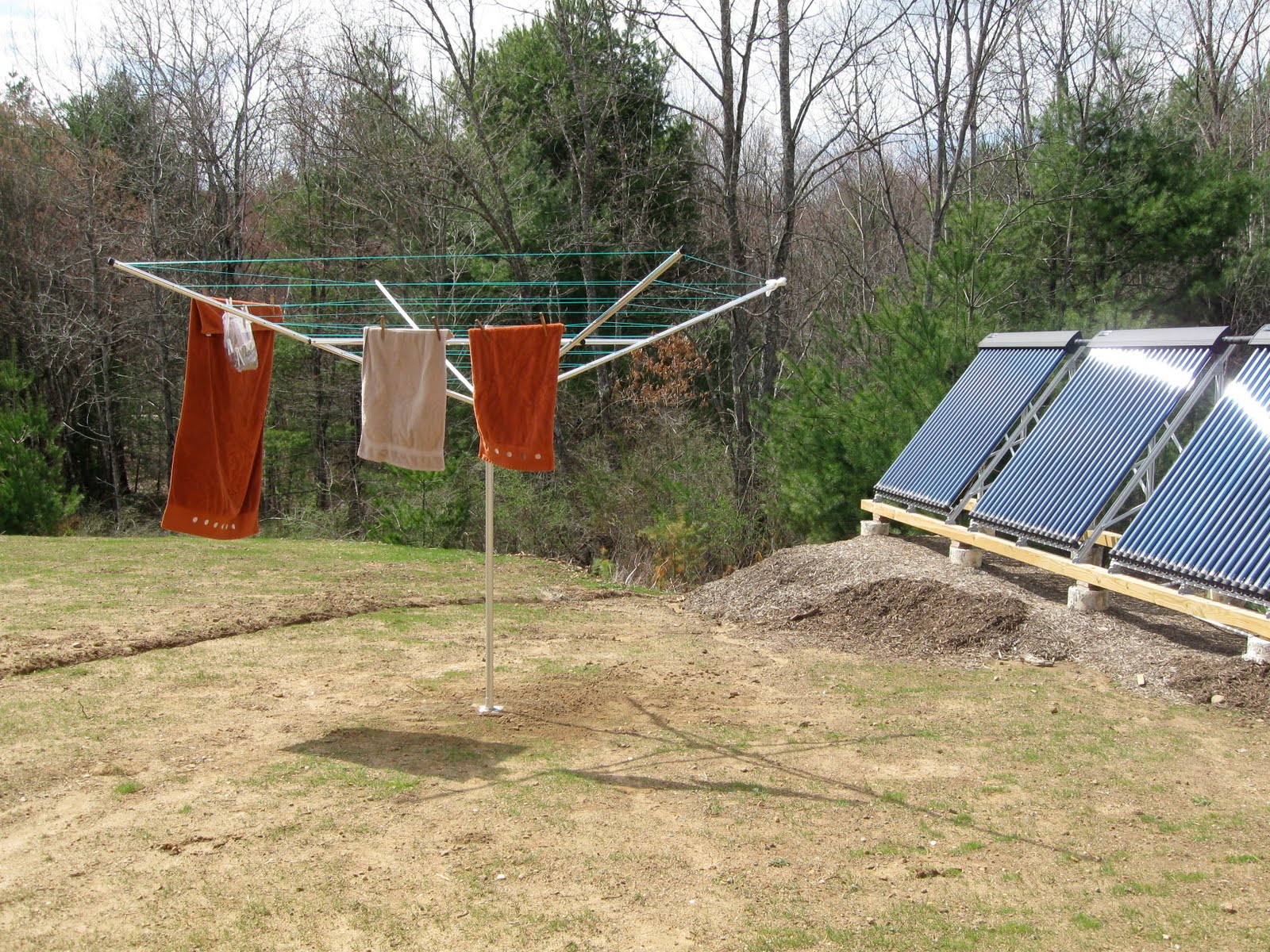 Spring is here..it's time to take that laundry outside to dry. Hardcore energy conservationists probably dry their clothes outside in the winter too, but I'm a bit too wimpy for that. In the winter I dry my clothes on drying racks inside. But now that it's warm and sunny I'm using my NEW breezecatcher drying rack. I just purchased and installed it several weeks ago and I LOVE IT. Jeremy says "you're getting old when your excitement for the week is hanging your laundry up to dry". But seriously...going outside on a sunny day in April, watching and listening to the robins, seeing my solar panels pumping free hot water into my house, and using my new clothes dryer is a great experience. I highly recommend it.
Monday, April 5, 2010
15 minutes
In the past six weeks we have hosted a number of reporters for interviews and tours for newspaper articles on our house. We've had 5 articles written, including one today in the Waterbury Republican American, that had some of the best pictures so far. There was a great art shot of our urinal, of all things, a Kohler waterless urinal. And in the print version they printed several color pictures of Nola on the stairs and playing on the concrete floor. Jeremy says cute kids sell papers. It's been fun to see all our hard work be recognized and to be able to tell about our experience building the house. The PR blitz is in preparation for the Solar Home Tour sponsored by PACE for our home on this Saturday, April 10, from 12 - 4. So far 76 tickets have sold and PACE expects a flurry of last minute purchases, a real "hit" in the eyes of the organization. Jeremy and I are going to be busy for those four hours... however, we will have a number of our venders here to help us answer questions about the house.
The other exciting development is that I finally met with a landscape architect that specializes in native plants. Lisa Turoczi, from Earthtones Nursery, came up with some great suggestions for our "blank canvass" around the house and for some areas down by our brook. I'm looking forward to getting some plants in the ground around the house and get the birds and other critters back. I'm not getting anything to my bird feeder because there is no other habitat to attract them.
Next post will be an update on our solar hot water system (Spring version) and photos of my new solar clothes dryer.
Wednesday, February 3, 2010
Twilight


I've been waiting for a clear day following a fresh snowstorm to take some night pictures. I think they turned out nice.
Subscribe to:
Posts (Atom)